

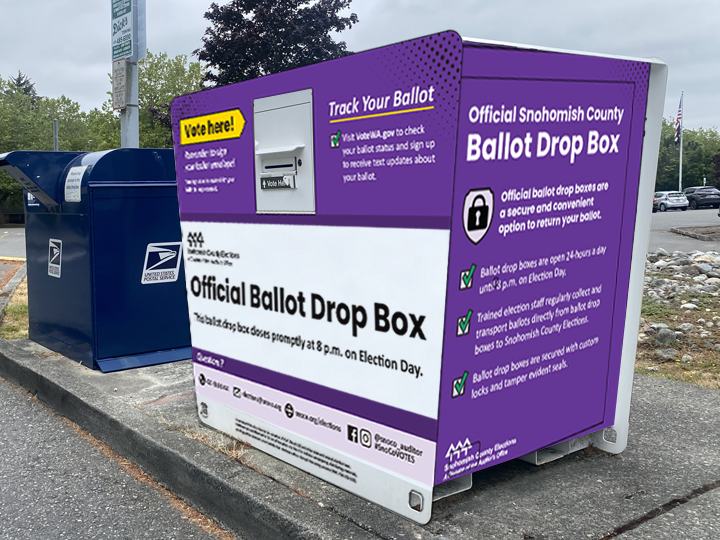
Election security is one of the most pressing topics of our time. For election administrators, the mission is simple but profound: ensure every vote is counted fairly, transparently, and securely. But executing that mission in the real world—where physical assets sit in public spaces 24/7—is anything but simple.
Ballot drop boxes have become a cornerstone of modern voting infrastructure. They offer convenience and accessibility, allowing voters to participate on their own schedule. Yet, their very accessibility makes them vulnerable. How do you ensure a steel box sitting in a library parking lot or a remote rural roadside remains secure, uncompromised, and monitored around the clock?
This was the exact challenge facing Snohomish County, Washington. With over 530,000 registered voters and 35 drop boxes collecting more than half of all ballots, the stakes were incredibly high. Their journey from manual monitoring to a sophisticated, real-time Internet of Things (IoT) solution is not just a success story—it’s a blueprint for the future of election integrity.
In our latest case study, we dive deep into how Snohomish County partnered with Link Labs to revolutionize their drop box monitoring. Below, we’ll explore the key challenges they faced, the technology that changed the game, and the results that are setting a new standard for election security.
The Challenge: Protecting Democracy in Public Spaces
Snohomish County Elections operates with a clear mandate: "To conduct fair, accountable elections and encourage people to understand and participate in the voting process." For the staff, accountability isn't a buzzword. It means guaranteeing that ballots are always stored in locked, sealed, and closely monitored locations.
However, the physical reality of ballot drop boxes presents unique hurdles. These boxes are designed for drive-up convenience, often placed in open, public areas. While this is great for voters, it exposes the infrastructure to risks ranging from accidental vehicle collisions to intentional vandalism.
The Wake-Up Call
The vulnerability of these assets became undeniably clear in April 2024. A drop box at a local school was struck by a vehicle with such force that it sheared the anchoring bolts and pushed the 1,300-pound steel container nearly twenty feet from its base.
While this incident happened outside an active election cycle—meaning no ballots were at risk—it served as a critical wake-up call.
"Had this incident occurred during an election, it could have posed serious challenges," county election officials noted. "Without a notification system, our awareness of damage often depends on secondhand reports from voters or nearby property owners, delaying our ability to respond, secure ballots if necessary, and assess the situation."
This incident underscored a gap identified in the 2022 Seattle Urban Area Security Initiative (UASI) Stakeholder Preparedness Review. The county faced several operational blind spots:
- Limited real-time monitoring: They couldn't "see" what was happening at drop box locations without being there physically.
- Delayed alerts: Reliance on public reporting meant reaction times were slower than necessary.
- Response capability: Without immediate data, deploying the right resources to fix damage or investigate suspicious activity was difficult.
With the 2024 Presidential Election approaching and 68% of voters expected to use these drop boxes, Snohomish County knew they needed a robust solution. They needed eyes on the ground, everywhere, all at once.
The Search for a Smarter Solution
Before looking for a high-tech monitoring partner, Snohomish County had already hardened their physical infrastructure. They upgraded to purpose-built drop boxes featuring quarter-inch steel walls and specially designed slots to resist tampering. But physical strength wasn't enough; they needed intelligence.
The county had a specific list of "must-haves" for a monitoring system:
- Impact Detection: Immediate alerts if a box was hit or tampered with.
- Door Status Monitoring: Tracking exactly when a door was opened or closed to ensure unauthorized access didn't occur.
- Environmental Monitoring: Watching for temperature spikes that could indicate fire or other hazards.
- Chain of Custody: Tracking the ballot transfer containers themselves as they moved from the drop box to the processing center.
Why Off-the-Shelf Cameras Weren't the Answer
Many jurisdictions turn to video surveillance, and Snohomish County considered it. However, cameras have significant limitations. They provide great historical evidence after an incident, but they require constant human monitoring to be useful in real-time. Furthermore, in rural locations with spotty connectivity, streaming high-definition video is often technically impossible.
Other hardware providers offered monitoring tools, but they often required dedicated power sources. Digging trenches for power lines at 35 diverse locations—ranging from city centers to rural outposts—was logistically impractical and cost-prohibitive.
They needed a solution that was wireless, battery-operated, reliable, and capable of operating on a dedicated network independent of local Wi-Fi or power grids.
Enter Link Labs: The IoT Transformation
Snohomish County found their answer in Link Labs and the SuperTag system. While the system wasn't originally designed exclusively for elections, its flexibility made it the perfect fit. Link Labs offered a platform that could be adapted to the specific, high-stakes needs of election security.
The solution combined AirFinder Everywhere SuperTags with custom door sensors. This setup allowed the county to monitor unauthorized entry, physical impacts, and environmental anomalies in near real-time.
A Collaborative Implementation
The partnership began with a pilot program in 2022, testing tags in both rural and urban environments. This "crawl, walk, run" approach was crucial. It allowed both teams to establish baseline performance data and tweak the system before a major rollout.
By April 2024, the county had deployed 35 SuperTags across their entire network of drop boxes.
The technology provided:
- GPS Monitoring & Geofencing: If a 1,300-pound box moves even a few feet (like in the collision incident), the system triggers an alert immediately.
- Shock Sensors: The tags can distinguish between normal vibrations (like a heavy truck passing by) and significant impacts (like a vehicle collision or sledgehammer strike).
- Door Sensors: Every time a collection team opens a box, the event is logged. If a door opens at 2:00 AM when no team is scheduled, an alert is sent instantly.
- Independent Connectivity: The SuperTags utilize a low-power, wide-area network, ensuring connectivity even in areas where standard cellular coverage might struggle.
Innovation Through Integration
Perhaps the most impressive part of this deployment was how Snohomish County integrated the data. They didn't just rely on a third-party app; they ingested the data directly into their own systems.
Using MQTT data feeds, the county created a custom ArcGIS dashboard. This "Mission Control" screen provides a live map of the entire county. Election officials can see the status of every drop box, the location of every collection team, and the health of every sensor in one view.
The system automatically color-codes icons based on status: green for normal, red for open doors, or yellow for impact alerts. It even integrates real-time traffic data and hazard alerts, allowing dispatchers to route collection teams safely and efficiently.
Real-World Results: Peace of Mind and Rapid Response
The true test of any security system is how it performs when things go wrong. Since implementing the Link Labs solution, Snohomish County has transformed its operational posture from reactive to proactive.
Validating the System
The system's value has already been proven in the field. During recent cycles, the shock sensors triggered alerts that allowed for immediate investigation.
In one instance, an "8.3k shock alert" was triggered at a drop box. Because the alert was instant, staff could investigate immediately. They discovered that nearby road work was causing heavy vibrations. While this was a benign event, it proved the system worked. The ability to quickly determine the source prevented unnecessary panic and validated the sensitivity of the sensors.
In another event, a Friday evening alert from a library drop box prompted staff to call the location directly. Library staff were able to check the box within minutes, confirming everything was normal. This rapid verification loop saves time, resources, and stress.
Enhancing Chain of Custody
Security doesn't stop when the ballots leave the box. The county also placed GPS-enabled devices inside the ballot transport containers. This allows staff to monitor the journey of the ballots from the drop box to the processing center.
This adds a critical digital layer to the chain of custody. Officials can prove exactly where ballots were at any given moment, adding a level of transparency that builds public trust.
"Knowing that we will be alerted to physical impacts, drop box movements, or other anomalies—day or night—gives us confidence that we can respond quickly and mitigate challenges," election officials explained.
Why This Matters for the Future of Elections
The Snohomish County story is about more than just sensors and batteries. It’s about the evolution of trust in democratic institutions. In an era where election integrity is constantly scrutinized, having verifiable, data-backed security measures is essential.
This case study demonstrates that off-the-shelf technology, when applied creatively and collaboratively, can solve complex public sector problems.
Snohomish County isn't stopping here. They are already looking ahead, collaborating with the University of Washington to develop smart scales that sit inside the boxes. These scales would continuously weigh ballots and transmit "fullness" data via the Link Labs SuperTag. This would allow the county to route collection teams dynamically, emptying boxes only when they are full, saving fuel and staff hours.
Download the Full Case Study
The details of this deployment—including the specific technical hurdles overcome, the iterative testing process, and the exact configuration of the dashboard—are invaluable for any organization looking to secure remote assets.
Whether you are an election official looking to modernize your infrastructure, a city planner managing public assets, or a logistics manager interested in advanced IoT monitoring, this story offers practical insights you can use.
In the full case study, you will learn:
- Detailed Technical Specifications: How the SuperTag and door sensors were configured to avoid false positives.
- Implementation Roadmap: The step-by-step process Snohomish County used to go from pilot to full deployment.
- The "Human" Element: How technology changed the daily workflow for election staff and improved morale.
- Future Innovations: A look at the prototype smart scale and what’s next for election IoT.
Don't rely on guesswork when it comes to security. See how Snohomish County turned a vulnerability into a strength by downloading the case study.
Contact us today to learn more.
.png)

